

 See My Latest Article on HelloNation

A missing tooth can seem like a minor inconvenience, especially if it is toward the back of the mouth or does not cause pain. However, the space can gradually affect chewing, speech, bite balance, gum health, and the bone that once supported the tooth.
For residents of Sterling Heights, missing teeth may also influence everyday habits such as eating comfortably at work, speaking clearly in meetings, or choosing foods during busy winter routines when convenient, softer meals may seem easier. The effects are not always immediate, which is why a missing tooth is often ignored longer than it should be.
Can one missing tooth really affect the rest of the mouth?
Yes. Teeth function as a connected system rather than as completely separate units. A gap can change how nearby teeth receive pressure and how the upper and lower teeth meet during chewing.
Over time, neighboring teeth may begin to tilt or drift into the open space. The tooth that once fit against the missing tooth may gradually move farther into the gap from the opposite jaw. These changes can make cleaning more difficult and may create uneven biting forces.
A small space may also encourage a person to chew mostly on one side. That habit can place extra strain on certain teeth and jaw muscles. Some people notice jaw fatigue, tenderness, or headaches, although these symptoms can have many possible causes.
What happens to the jawbone after a tooth is lost?
The bone around a natural tooth is maintained partly by the stimulation created when the tooth is used. After tooth loss, the area no longer receives the same force, and the supporting bone can gradually shrink.
This process is called bone resorption. It does not happen at the same rate for everyone, and the amount can vary depending on the tooth, the health of the gums, the cause of tooth loss, and the length of time the tooth has been missing.
Bone changes matter because they may:
- Alter the shape of the gumline
- Make a removable appliance less stable
- Change the appearance of the lower face in cases of extensive tooth loss
- Reduce the available foundation for some forms of tooth replacement
- Make later treatment more complex in certain situations
Bone loss is not always visible in a mirror. Dental imaging is often needed to evaluate the supporting bone and the condition of nearby teeth.
Does a missing tooth affect chewing or nutrition?
It can. A single missing tooth may not noticeably limit eating, but several missing teeth—or the loss of a molar used for grinding—can make certain foods harder to manage.
People may begin avoiding foods that require firm biting or thorough chewing, including raw vegetables, nuts, lean meats, or crisp fruits. Some may choose softer foods more often or chew quickly on the side that feels stronger. This can reduce eating enjoyment and may affect the variety of foods in the diet.
Difficulty chewing can also become more noticeable with age, dry mouth, gum disease, or additional tooth loss. A person who has adapted to a gap for years may not realize how much the missing tooth has changed eating patterns.
Can missing teeth change speech?
They can, particularly when front teeth or several teeth are missing. Teeth help guide the tongue and control airflow for certain sounds. A gap may affect pronunciation, clarity, or the way words are formed.
The change may be subtle. Some people compensate naturally, while others notice a slight whistle, altered “s” sound, or difficulty speaking for long periods. Removable appliances can also require an adjustment period because the tongue must adapt to a new shape in the mouth.
Speech concerns are not limited to appearance. Clear communication matters in classrooms, workplaces, family conversations, and social situations throughout the community.
Is a missing tooth always a sign of poor oral health?
No. Teeth can be lost because of decay, gum disease, injury, fractures, congenital conditions, or complications from previous treatment. Tooth loss is not a simple measure of personal habits.
However, the reason the tooth was lost still matters. If decay or gum disease caused the problem, those conditions may remain active elsewhere in the mouth. Replacing the missing tooth without addressing ongoing infection, inflammation, or poor cleaning conditions may not protect the remaining teeth.
Advanced gum disease can damage the bone and tissues that hold teeth in place. A person who has lost a tooth to gum disease may need careful evaluation of the surrounding gums before considering any replacement option.
What are the main ways a missing tooth can be replaced?
The appropriate choice depends on the number and location of missing teeth, bone support, gum health, medical history, budget, comfort preferences, and the condition of neighboring teeth.
Common options include:
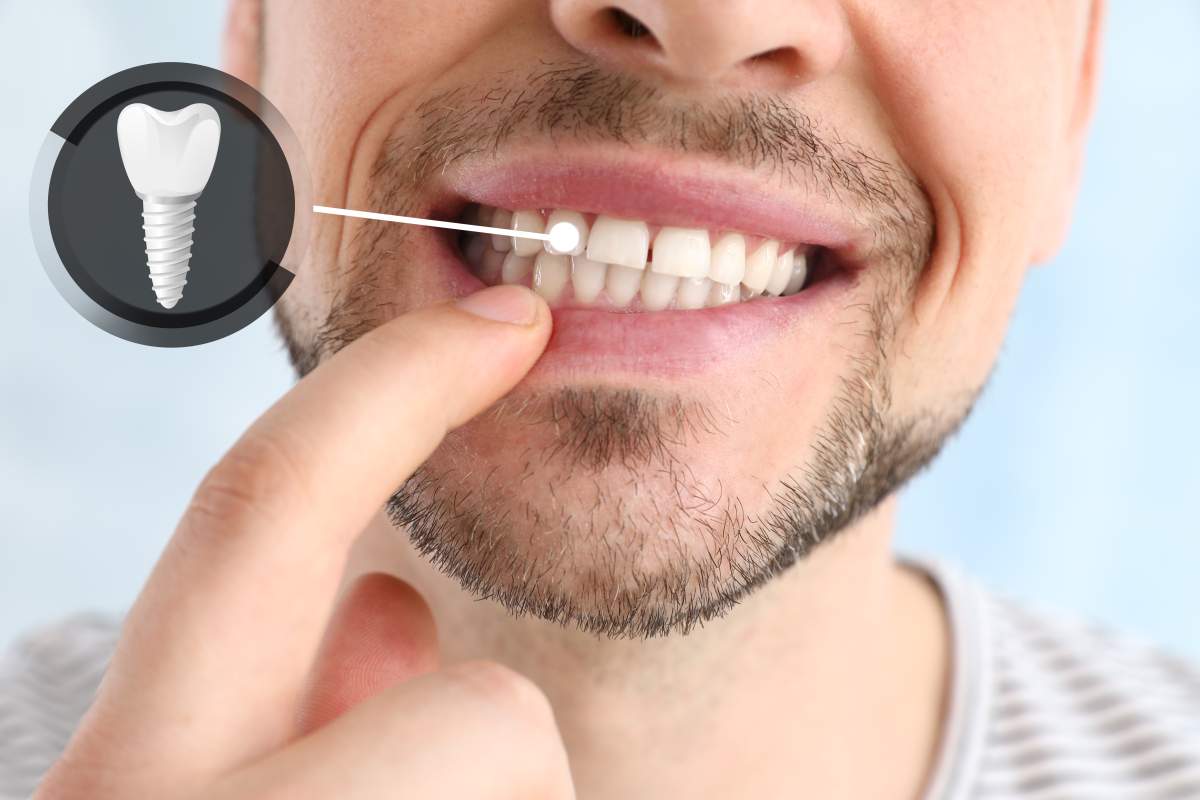
- A dental implant with a crown: An implant is placed in the jawbone and supports a replacement tooth. It is designed to replace both the visible tooth and, in part, the function of a tooth root.
- A fixed bridge: A replacement tooth is supported by neighboring teeth. This may be useful in some situations, although the supporting teeth must be evaluated carefully.
- A removable partial denture: A removable appliance replaces one or more teeth and can be taken out for cleaning.
- No immediate replacement: In selected cases, monitoring may be reasonable, particularly when the space has little effect on function and the risks of treatment outweigh the expected benefits.
There is no single solution that fits every missing tooth. A back tooth, front tooth, and several adjacent teeth create different functional and cosmetic considerations.
How soon should a person address a missing tooth?
A missing tooth does not always require emergency treatment, but it should not be ignored indefinitely. Prompt evaluation is especially sensible when the tooth was recently lost, the area is painful, the gums bleed or swell, or other teeth feel loose or sensitive.
Urgent attention is warranted for facial swelling, fever, uncontrolled bleeding, severe pain, difficulty swallowing, or trouble breathing. These symptoms can indicate infection or another condition that should not wait.
For a longstanding gap, evaluation can still be useful. The mouth may have adapted, but changes in bone, bite, gum position, and neighboring teeth can continue over time. An examination and appropriate imaging can clarify whether the space is stable, worsening, or affecting other parts of the mouth.
What can residents do while deciding on treatment?
Daily care remains important even when a tooth is missing. Brush the remaining teeth with fluoride toothpaste, clean between the teeth, and pay attention to the gum tissue around the open space. Food can collect in the gap, especially when nearby teeth have shifted.
Avoid using the space to break hard objects or repeatedly biting very hard foods on one side. Keep track of changes such as new sensitivity, shifting teeth, bleeding, swelling, or difficulty chewing.
A missing tooth is not merely an empty spot. It can influence the mechanics and health of the entire mouth, and understanding those effects helps people make informed decisions before a small problem becomes a larger one.